
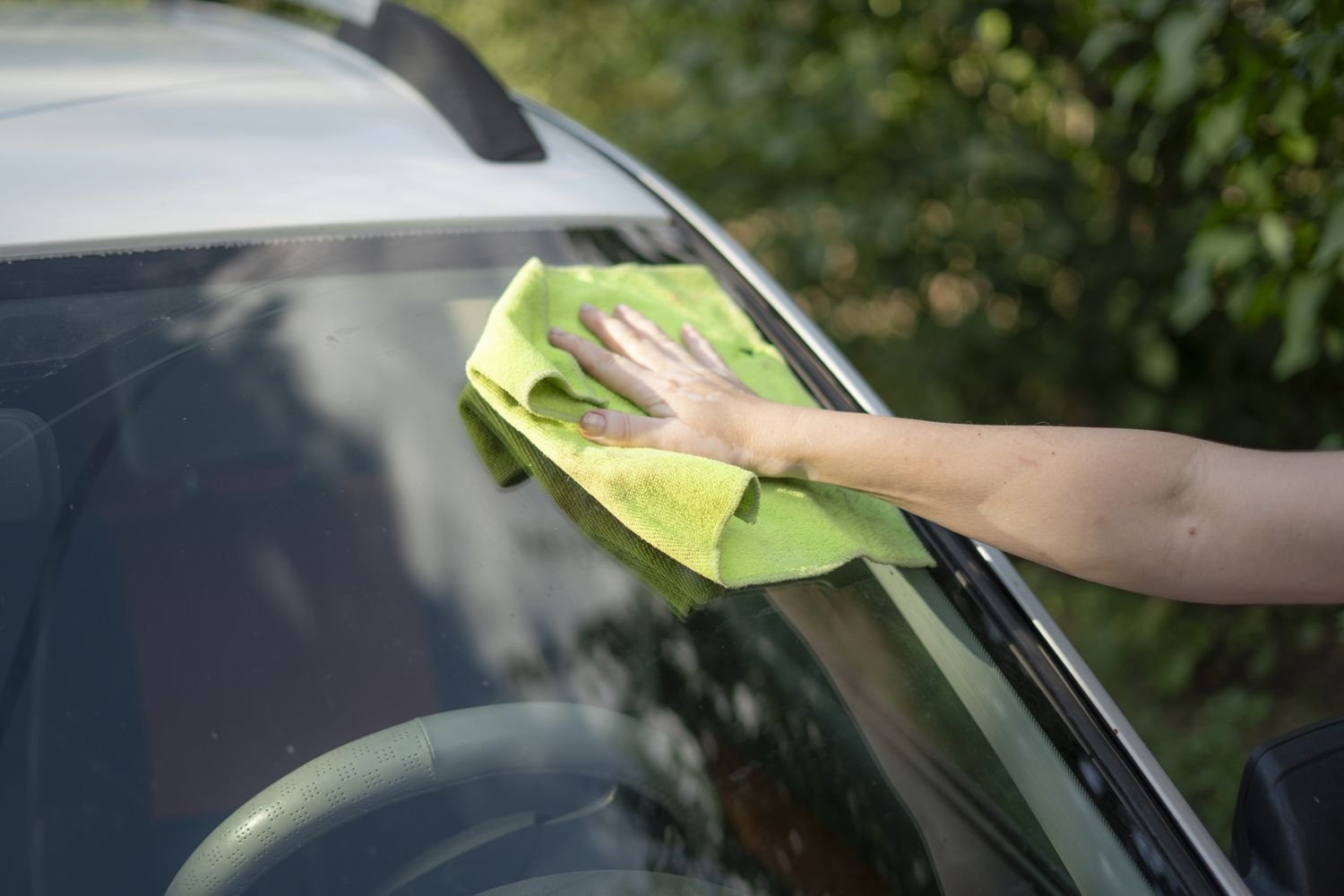
Cleaning your glass with a mixture of white vinegar and water is the most effective way to remove film and streaks from the inside of your car window. This task takes about 15 minutes to complete and requires only basic household items. It’s a medium-difficulty job because you must reach awkward corners of the dashboard without leaving lint behind. Before you start, you must have a clean, dry microfiber cloth, as using a paper towel often leaves tiny fibers that ruin the finish of the glass.
Supplies for glass cleaning

| Item | How much | Why it’s needed | A substitute |
|---|---|---|---|
| White vinegar | 1/2 cup | Cuts through oily film | none — don’t swap this |
| Distilled water | 1/2 cup | Prevents water spots | Tap water (if soft) |
| Microfiber cloth | 2 cloths | Removes dirt and polishes | Cotton rag (less effective) |
| Spray bottle | 1 bottle | Applies solution evenly | Bowl and sponge |
Use distilled water exclusively if your local tap water contains high mineral content. Hard water leaves behind tiny calcium deposits that create a hazy, streaky finish regardless of how hard you buff the glass. You can test your water by letting a drop evaporate on a dark surface; if a white ring remains, stick to distilled.
Avoid the common mistake of using paper towels for the final wipe. They leave behind microscopic lint fibers that catch the light and make the glass look dusty immediately after cleaning. If you must use a cotton rag, ensure it’s an old, lint-free t-shirt rather than a plush towel.
Always keep two microfiber cloths on hand. Use the first to remove the bulk of the grime and the second to buff the surface to a streak-free shine. If the first cloth becomes saturated with dirt, it will simply smear the oily film across the pane instead of lifting it away. Switch to a fresh cloth the moment the current one feels damp to the touch.
Preparing the vehicle
Park your car in a shaded area to prevent the vinegar solution from drying too quickly, which causes streaks. Aim to work when the glass surface temperature is below 85 degrees Fahrenheit. If the glass feels hot to the touch, the solution will evaporate before you can wipe it clean, leaving behind a cloudy residue that’s difficult to remove.
Clear all items from the dashboard and move the front seats back to give yourself room to reach the base of the windscreen. Switch off the car’s climate control system to stop air from blowing onto the glass while you work.
Cover the dashboard with a thick, absorbent microfiber towel to catch any drips. Vinegar can permanently spot certain delicate leather or porous plastic finishes if left to sit.
Check your vehicle owner’s manual for specific warnings about using acidic cleaners on factory-tinted film or aftermarket coatings. If the manual prohibits vinegar, use only distilled water. If you notice a purple hue or bubbling on the edges of your tint, skip the vinegar entirely to avoid damaging the film’s adhesive layer.
Steps to clean the inside windscreen with vinegar
- Mix 1/2 cup of white vinegar with 1/2 cup of distilled water in a clean spray bottle to create your cleaning solution.
- Spray a light mist of the mixture directly onto your first microfiber cloth rather than the glass to prevent overspray on the dashboard.
- Wipe the inside of the windscreen in a side-to-side motion, starting from the top and working your way down to the dashboard.
- Apply firm pressure to the glass, especially in the corners, to ensure you lift all the oily residue that builds up over time.
- Check the cloth frequently; if it looks dark or dirty, switch to the second clean, dry microfiber cloth immediately to avoid spreading the grime.
- Buff the glass using circular motions with the dry side of your second cloth until the surface feels smooth and looks perfectly clear.
- Inspect the glass from outside the vehicle to see if any missed spots or streaks remain against the natural daylight.
- Repeat the wiping process using a fresh section of your dry cloth if you find any lingering haze or streaks.
Signs of a clean windscreen
You’ll know the job is finished when the glass looks invisible under direct light. A clean windscreen should feel slick to the touch, and there should be no visible haze when you look through it toward the sun. If you see cloudy patches or streaks, it means the vinegar solution hasn’t fully lifted the oily film. This often happens because the microfiber cloth became saturated with dirt during the process.
If the glass still looks cloudy, perform a second round using a completely dry, clean cloth to buff the surface again. High levels of humidity or oily residue from interior plastics often require two passes to achieve perfect clarity. Interior materials can off-gas chemicals that settle on the glass, so removing this layer is important for both visibility and air quality.
To test for success, run a clean fingertip across the glass. If you hear a faint squeak, the surface is truly clean. If the movement feels silent or drags, a film remains. If the haze persists after two cleanings, you likely have a layer of bonded mineral deposits or road grime that vinegar can’t dissolve.
In this case, switch to a dedicated clay bar treatment. This lifts embedded contaminants that chemical cleaners simply slide over. If you skip this step, the residue will trap moisture, causing your windscreen to fog up instantly the moment you turn on the defroster.
Troubleshooting common issues
| What happened | Why | What to do |
|---|---|---|
| Streaks remain | Cloth is dirty | Use a fresh cloth |
| Hazy finish | Vinegar concentration too high | Add more distilled water |
| Lint on glass | Used paper towels | Use microfiber only |
| Vinegar smell | Too much product used | Wipe with damp cloth |
| Glass stays cloudy | Old wax buildup | Use glass-safe polish |
If you see streaks despite using a clean cloth, check your drying technique. Most people wipe in circular motions, which simply redistributes residue. Instead, use a vertical stroke on the interior and a horizontal stroke on the exterior. This allows you to identify exactly which side of the glass holds the streak.
A hazy finish often stems from using hard tap water rather than distilled. Minerals in tap water leave behind deposits that vinegar can’t dissolve. If your mixture has been sitting for more than a week, discard it and mix a fresh batch.
If the glass remains cloudy after polishing, you’re likely dealing with a layer of automotive wax or silicone-based cleaner. A standard vinegar solution won’t penetrate this barrier. Use a dedicated glass clay bar or a specialized chemical stripper to remove the film. If the surface feels tacky to the touch, you have applied too much product. Buff the area with a dry, lint-free cloth until the resistance disappears.
Frequency of cleaning
You should clean the inside of your windscreen to maintain clear visibility. The frequency depends on your specific driving habits and environment, so consult your owner’s manual for the recommended maintenance schedule.
If you smoke, you’ll need to clean the glass every two weeks to prevent tar buildup. This residue creates a refractive haze that makes oncoming headlights bloom and blur at night.
If you rarely use the recirculate setting, dust and oily residues take longer to accumulate, allowing you to stretch the time between cleanings to three months. Most drivers make the mistake of wiping the glass with a dry cloth, which only smears the oils further. Use a dedicated glass cleaner and a fresh microfiber towel instead.
If you notice a film returning within days, your cabin air filter is likely clogged. Replace the filter to stop the debris from recirculating onto your windshield.
Frequently asked questions
Can I use apple cider vinegar instead of white vinegar?
You shouldn’t use apple cider vinegar because it contains sugars that will leave a sticky residue on your glass. Stick to plain white vinegar, which is an acetic acid solution that evaporates cleanly. If you don’t have white vinegar, use only distilled water or a dedicated automotive glass cleaner to avoid creating a new film on your windscreen.
Is it safe for tinted windows?
It’s generally safe for factory-tinted glass, but you should avoid vinegar on aftermarket film. Vinegar is acidic and can degrade the adhesive or topcoat of some window tinting materials over time. If your car has aftermarket tint, check the manufacturer’s care guide or use a pH-neutral glass cleaner that’s specifically labeled as safe for film.
Why is my windscreen still foggy after cleaning?
The fog is likely a sign that the interior plastic surfaces are still off-gassing or that you have a leak in your heater core. If the film returns within a few days and feels slightly greasy or sweet-smelling, have a mechanic check your cooling system. A leaking heater core releases glycol into the cabin, which creates a persistent, oily haze on the glass.
How long does the cleaning solution last?
The mixture of vinegar and water should be used immediately and discarded after the cleaning task is complete. Since there are no preservatives in this solution, it’s best to mix only what you need for the current job. If you notice any particles floating in the bottle or a strange odor, discard the mixture and prepare a fresh batch for your next cleaning.
Does the temperature of the glass matter?
The glass temperature should be cool to the touch, as heat causes the vinegar to evaporate too quickly. If the windscreen is hot from sitting in the sun, you’ll struggle to buff it before the solution dries, which leads to permanent-looking streaks. Always park in a garage or shaded area for at least 20 minutes before you start the cleaning process.
What if I get vinegar on my leather seats?
Wipe the area immediately with a damp cloth and dry it thoroughly to prevent discoloration. Vinegar is acidic and can cause spots on sensitive leather or dashboard plastics if left to sit. Always blot spills rather than rubbing them to avoid pushing the liquid deeper into the material.
Conclusion
Once you’ve finished, take a quick look at the glass from outside the car to check for missed spots. If you notice any lingering haze, just give those areas a light buff with a fresh cloth. You’ll really appreciate the clear view the next time you’re driving toward the sun.