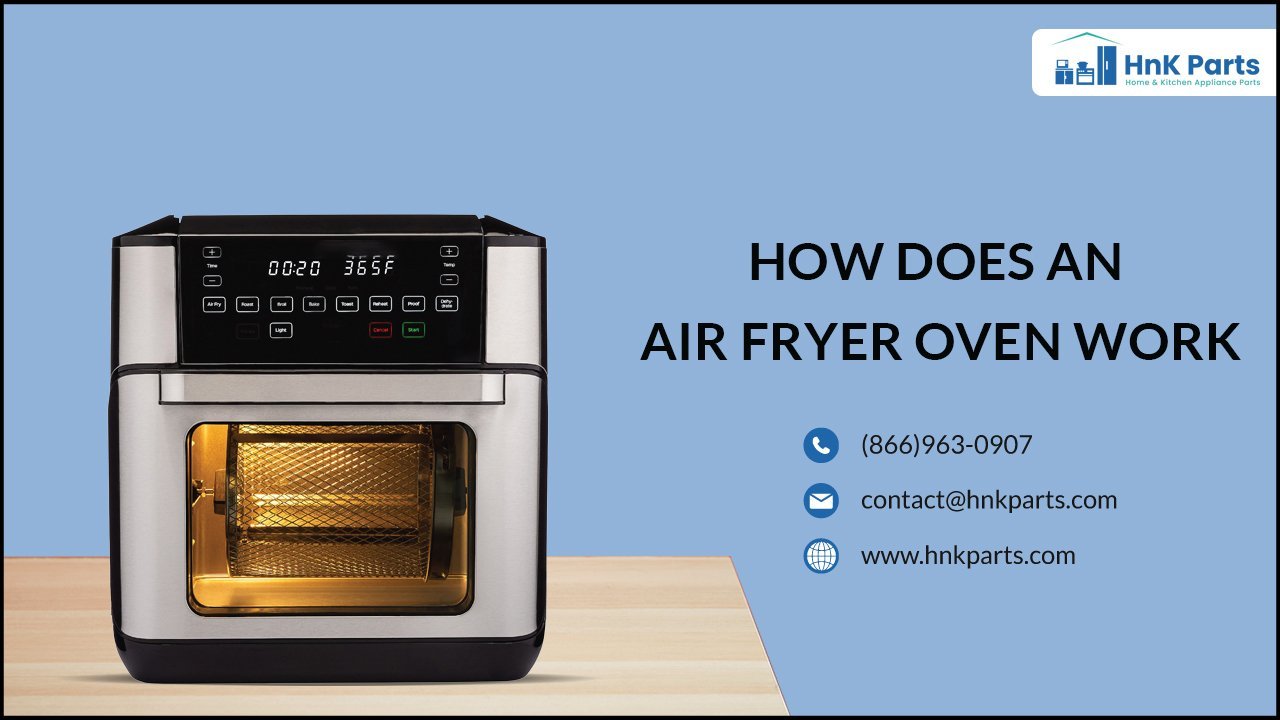
An air fryer is essentially a compact convection oven, and understanding the mechanics of how an air fryer works helps you realize why these small appliances crisp food so quickly.
How the fryer components work inside your oven
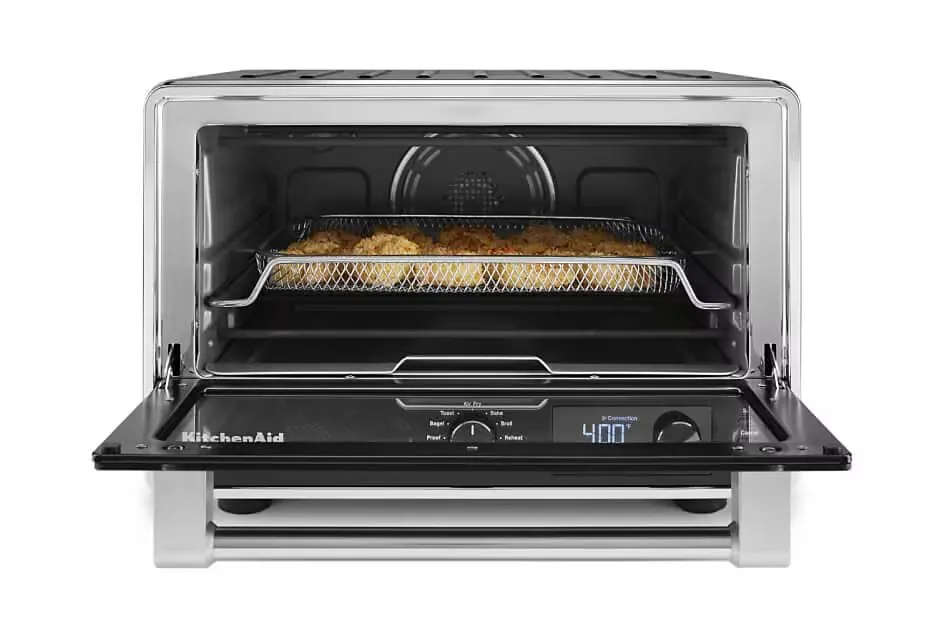
| Part or input | What it does | What you notice when it goes wrong |
|---|---|---|
| Heating element | Creates intense heat | Food stays cold or raw |
| High-speed fan | Circulates the hot air | Uneven cooking or soft crusts |
| Perforated basket | Allows air flow below | Soggy bottom on the food |
| Control board | Sets time and heat | Unit won’t start running |
| Safety switch | Stops heat when open | Unit doesn’t turn on |
If your food cooks unevenly, check the fan blades for carbon buildup. This creates cold spots near the basket edges.
When the unit fails to start, inspect the safety switch pin. This small plastic tab often snaps off if the basket is slammed shut. If the pin is missing, the circuit remains open, and the machine won’t draw power. You can test this by pressing the switch manually with a non-conductive tool.
Always unplug the unit before touching the heating element. If the element glows orange in patches rather than a uniform red, it has developed a hot spot and needs replacement. Don’t attempt to bridge a blown thermal fuse; it’s a fire hazard that protects your home from overheating. If you see a flickering display, the control board has likely suffered a voltage spike. In this case, unplug the unit for ten minutes to reset the internal capacitor.
Steps for cooking with forced air
- Place your food in the basket, leaving space between items. Air needs to move around every piece to crisp it properly, so don’t crowd the tray. If the basket is too full, your food will steam instead of crisp.
- Slide the basket into the unit until it clicks. This engages the safety switch, which tells the machine it’s safe to heat up. If the basket isn’t pushed in all the way, the fan won’t turn on.
- Set your temperature and time on the control panel. For most frozen snacks, 400°F is the standard setting for crispness. If you’re cooking delicate vegetables, lower the heat to 350°F to prevent burning the outside before the center is cooked.
- Shake or flip the food halfway through the cooking time. This ensures all sides get equal exposure to the hot air. If you skip this step, one side will be much darker or crispier than the other side.
- Check the internal temperature of meat using a digital food thermometer. According to the USDA food safety guidelines, you should ensure poultry reaches 165°F and ground meat reaches 160°F. Insert the probe into the thickest part of the food to get an accurate reading.
- Remove the basket carefully using heat-resistant gloves. The metal parts will be extremely hot. Let the food sit for 2 minutes before serving so the residual heat can finish the cooking process without drying out the interior.
Why air flow matters for crisping
The primary reason food crisps in an air fryer is the speed of the hot air. Unlike a standard oven, which relies on natural air movement, an air fryer forces air through the basket. This constant movement creates a thin, dry layer on the surface of your food. This is why you can’t get a true, deep-fried crunch in a standard oven without using significantly more oil to mimic the heat transfer.
When you pack the basket too tightly, you block the path of the air. The fan is working, but the air can’t reach the bottom or middle of your food. This causes a temperature drop in those blocked areas.
You might notice that the top of your fries are brown while the ones at the bottom are still limp and pale. If your air fryer is overloaded, the moisture released by the food gets trapped in the basket. This creates a humid environment that prevents the Maillard reaction, which is the chemical process responsible for browning and flavor development.
If you’re wondering why your food doesn’t get crunchy, look at how you load the basket. A single layer of food is always better than stacking items. If you have a large amount of food, cook it in two smaller batches rather than one large one. This simple change allows the fan to do its job properly. The heating element is designed to maintain a consistent temperature, but it can only do so if the air can circulate freely.
What you can change and what you cannot
Things you control
- The amount of food you put in the basket at one time.
- The temperature setting for the specific type of food you’re cooking.
- The frequency of shaking the basket to ensure even air coverage.
- The amount of light oil spray you add to help browning.
Things fixed by design
- The maximum fan speed and air circulation pattern inside the unit.
- The location and wattage of the internal heating element.
- The safety interlock mechanisms that prevent operation when the basket is out.
If the fan stops spinning or the heating element fails to glow, you must stop using the device. These are electrical components that require professional repair. Never attempt to open the housing of an air fryer yourself, as internal capacitors can hold a dangerous electrical charge even after the unit is unplugged from the wall.
Getting more out of your appliance
Practical habits for using your air fryer center on maintaining airflow and keeping the unit clean. Always preheat your machine for 3 minutes before adding food. This ensures the air is at the target temperature from the very first second of cooking. If you skip this, your cooking times will be inconsistent and your food may lack that initial blast of heat needed for a good crust.
Clean the basket and the tray after every use to prevent grease buildup. When oil accumulates on the bottom of the basket, it can smoke during the next cycle and block the airflow holes. Use warm, soapy water and a soft sponge to avoid scratching the non-stick coating.
If you use metal tools to clean or scrape the tray, you’ll ruin the surface, which makes the food stick more often. A common mistake is using abrasive scouring pads; these strip the coating within months, forcing you to replace the entire basket.
Always leave at least 5 inches of space around the outside of the air fryer. The unit pulls in and vents hot air through these gaps. If you push the machine against a wall or under low cabinets, the hot exhaust air will be sucked back in. This causes the internal temperature to spike, which can trip the safety thermal fuse and permanently disable the unit.
If the unit feels overly hot to the touch during use, move it to a more open area immediately. When cooking high-fat items like bacon or wings, check the basket halfway through to drain excess grease. If the fat level rises above the drip tray, it will splatter onto the heating element, creating a fire hazard.
Frequently asked questions
How long does it take to preheat an air fryer?
Most air fryers reach the desired temperature in 3 minutes. You should check your specific model’s manual, as larger units with more powerful fans might take up to 5 minutes to fully stabilize. If you don’t preheat, add 2 to 3 minutes to your total cooking time to account for the ramp-up period required for the heating element to reach peak intensity.
Is it safe to use parchment paper in an air fryer?
It’s safe to use parchment paper if you follow the manufacturer’s weight guidelines. You must place enough food on top of the paper to hold it down, or it may fly up into the heating element and catch fire. Never use wax paper, as it isn’t heat-resistant and can melt or burn at the high temperatures required for air frying.
Why does my air fryer smoke during use?
The smoke is usually caused by leftover grease or food particles burning on the heating element. You should clean the removable basket and the area around the heating element after every use to remove these residues.
Can I cook raw meat in an air fryer?
You can safely cook raw meat as long as you reach the correct internal temperature. Always use a digital thermometer to ensure poultry hits 165°F and ground meat hits 160°F. Because air fryers cook very quickly from the outside in, the exterior can look done before the center is safe, so the thermometer is the only reliable way to check for doneness.
Does it matter if I use oil in my air fryer?
It doesn’t strictly require oil, but a light spray helps with browning and texture. You should use a high-smoke-point oil like avocado or grapeseed oil if you choose to add some. Never use aerosol cooking sprays directly from a can, as the propellants can damage the non-stick coating on the basket over time, leading to premature flaking and sticking.
What happens if I put the basket in the dishwasher?
Putting the basket in the dishwasher often ruins the non-stick coating over time. Most manufacturers recommend hand washing with a soft sponge and mild soap to extend the life of the surface. If the basket is labeled as dishwasher safe, use the top rack only and avoid harsh detergents, which can cause the finish to peel and expose the metal underneath.
Conclusion
Cooking with an air fryer is a reliable way to get crispy results when you understand that the fan is the secret to the texture. By keeping the basket from being overcrowded and ensuring the unit has space to breathe, you’ll get the best performance from your appliance every time you cook.